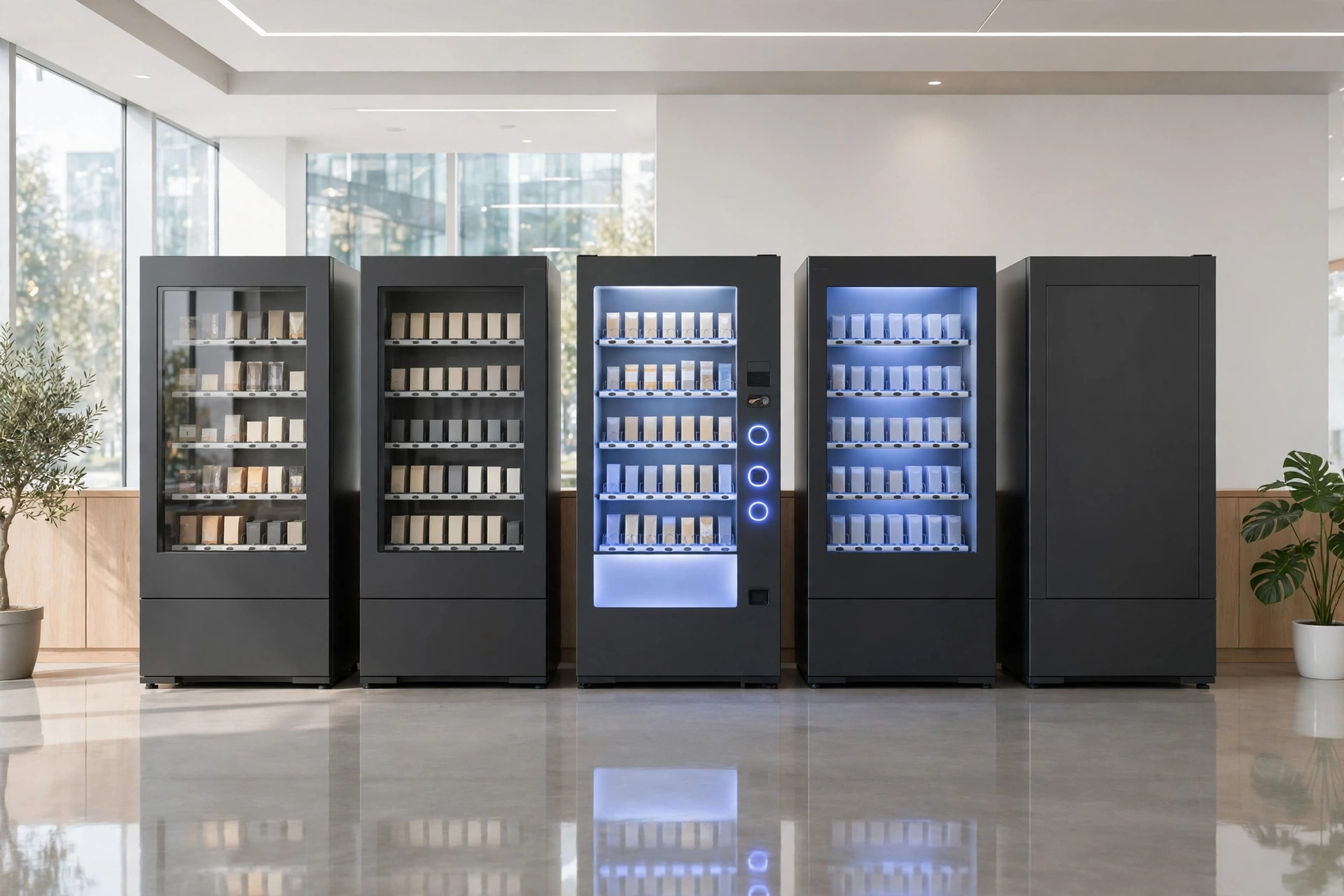
Unattended retail has the worst payment economics of any business in this guide and the clearest payback case. A card reader on a vending machine typically costs around 5.95% plus $0.05–$0.15 per transaction plus ~$8–$13/month in service fees — on a $2 vend, that's nearly 12% of the sale. Operators install them anyway, because cash-only machines are quietly losing a third of their sales to customers who no longer carry coins.
The full cashless stack: hardware, monthly, per-vend
| Platform (2026 pricing) | Hardware | Monthly service | Per transaction |
|---|---|---|---|
| Nayax (VPOS Touch) | $249–$399 (or $0 on multi-year contract) | $7.95–$12.95 | 5.95% + $0.05–$0.15 |
| Cantaloupe (ePort) | $199–$399 | $7.95–$10.95 | 5.95% + $0.10 |
| 365 Retail Markets | $199–$349 | $6.95–$11.95 | 5.90% + $0.10 |
Industry hardware pricing runs $200–$600 per reader with $50–$100 installation. Note the prices above are US-published — confirm Canadian pricing and cellular coverage with the distributor before ordering.
The $2-vend problem, worked
One $2.00 vend on Nayax at 5.95% + $0.10: $0.119 + $0.10 = $0.219 in transaction fees — 10.95% of the vend. Add the $7.95 monthly service spread over 500 vends ($0.016/vend) and the all-in cost is ~$0.235 per vend, or 11.7%.
Compare cash: the vend keeps the full $2.00 — but cash has its own stack (below), and the cash-only machine never sees the customer who tapped and walked away.
The break-even question isn't fee vs zero. It's fee vs the sales the reader creates. Industry data consistently shows 30–50% revenue lifts within 60 days of fitting readers — cash-only machines are functionally invisible to customers under 30.
Cash isn't free: the hidden handling cost
Cash handling has a real, auditable cost stack: counting labor, management reconciliation time, security and auditing, bank deposit fees for cash and coin, supplies, and armored-car transport. For a mid-size operation the money-room labor alone runs into the hundreds per month — before the shrinkage, the jammed validators, and the service call to a machine that ate a toonie. Price your cash handling honestly before comparing it to 5.95%.
Payback math: how many extra vends the reader must earn
The setup: one machine, 500 vends/month at $2.00 ($1,000 revenue). Reader cost: ~$117/month in transaction + service fees at the math above, plus ~$300 hardware amortized over 24 months ($12.50/month) → ~$130/month all-in.
The lift: a conservative 30% sales increase = 150 extra vends × $2.00 = $300 in new revenue, minus ~11.7% fees on those vends ($35) → ~$265 in new margin.
Payback: ~$265 new margin vs ~$130 reader cost — the reader pays for itself roughly twice over, before counting the telemetry value: remote stock levels, fault alerts, and fewer wasted service trips, which is what multi-machine operators actually rave about.
What operators say: real reviews
Nayax's Canadian store carries named operator testimonials: daily remote machine checks via telemetry, measured sales increases after fitting readers, and praise for the tap-and-go customer experience (shop.nayax.com/ca_en). Independent 2026 comparisons echo the strengths — widest international reach, reliable hardware, strong telemetry — while flagging the weaknesses honestly: US support responsiveness has slipped, and contract terms can be sticky (vendbuddy.io/blog/best-vending-machine-card-readers-2026). Cantaloupe earns its keep in the Seed ecosystem with clean reporting; 365 dominates micro markets more than standalone vending.
The unattended stack in one paragraph: fit the reader, price the vend to absorb ~12% all-in payment cost, and measure the lift in vends — not the fee in isolation. One machine at 500 vends/month pays back twice over at a 30% lift; the telemetry dividend (fewer dead trips) is the bonus that compounds across a route.
A note on steps: this is a unit-economics guide, not a repair procedure — the payback math above is the actionable part.
FAQ
What does a vending card reader cost per month?
Roughly $8–$13/month in service fees plus 5.9–5.95% + $0.05–$0.15 per transaction, on top of $200–$600 hardware. On a $2 vend, the all-in cost lands near 12%.
Does going cashless really increase vending sales?
Consistently, yes — industry data shows 30–50% revenue lifts within about 60 days, driven by customers who don't carry cash and higher average tickets on tap.
Nayax or Cantaloupe?
Nayax for international reach and telemetry depth; Cantaloupe if you're already in (or planning) the Seed/micro-market ecosystem. Get Canadian pricing and cellular coverage confirmed before choosing.